Chicago-Area Down Payment Assistance: What Chicagoland Buyers Need to Know Before Buying a Home
Chicago-Area Down Payment Assistance
What first-time buyers should know before they start shopping for a home
Let’s start with the biggest misconception floating around real estate right now:
A lot of buyers still think they need 20% down to buy a house.
They don’t.
And honestly, that outdated idea keeps more people stuck renting than almost anything else.
The reality is this: some buyers across Chicago and the surrounding suburbs may qualify for assistance programs that can help reduce upfront costs, preserve savings, and make the path to homeownership feel more realistic.
The challenge is that most people either:
-
assume they won’t qualify,
-
wait too long to explore options,
-
or get overwhelmed trying to sort through conflicting information online.
That’s where understanding Chicago-area down payment assistance becomes important.
Not because buyers need “easy money.”
Not because everyone should rush into buying.
But because informed buyers make smarter decisions.
And buying a home should feel strategic and steady — not like a financial obstacle course fueled by caffeine and confusing mortgage TikToks.
What Is Chicago-Area Down Payment Assistance?
Chicago-area down payment assistance programs may help qualified buyers cover upfront homebuying expenses such as:
-
down payments,
-
closing costs,
-
reduced-interest financing,
-
and certain loan-related expenses.
Programs may come in the form of:
-
grants,
-
forgivable loans,
-
or deferred-payment assistance.
Some programs are designed specifically for first-time buyers. Others may be available to repeat buyers depending on eligibility requirements.
The goal is simple:
help eligible buyers reduce some of the upfront costs that can make buying a home feel out of reach.
Because homeownership should improve financial stability — not create immediate financial panic the second the moving truck leaves.
Who Qualifies for Chicago-Area Down Payment Assistance?
Eligibility varies depending on the program, but most Chicago-area assistance programs look at a few key factors.
Income Requirements
Many programs use income limits based on:
-
household size,
-
Cook County guidelines,
-
and property location.
That does not automatically mean buyers need to be low income.
Depending on the program, some moderate-income and middle-income buyers may still fall within eligibility guidelines.
Credit Score Requirements
MMany programs and lenders look for credit scores in the 620–640+ range, though requirements vary by loan type, lender, assistance program, and the buyer’s full financial profile.
Credit matters, but perfection is not the goal.
Lenders also evaluate:
-
income stability,
-
debt-to-income ratio,
-
savings,
-
and overall financial picture.
Primary Residence Requirement
Most programs require buyers to live in the home as their primary residence.
Meaning:
you actually live there.
Not your cousin.
Not your “future Airbnb investment plan.”
Not your friend who “might rent it eventually.”
Simple enough.
How Chicago-Area Down Payment Assistance Programs Work

Most buyers begin by:
-
speaking with a participating lender,
-
reviewing eligibility,
-
completing a homebuyer education course,
-
getting preapproved,
-
and applying for assistance programs during the financing process.
If approved, assistance funds are typically applied according to the program’s guidelines, often at or near closing.
The process is manageable when buyers start early and work with people who understand local financing programs.
The biggest problems usually happen when buyers:
-
wait too long,
-
skip preparation,
-
or assume Google alone is going to walk them through one of the largest financial decisions of their life.
That strategy tends to get messy fast.
Take the Chicago-Area Down Payment Assistance Quiz
Before you start touring homes, it helps to understand what options may be worth exploring.
The quiz is a simple first step to help identify:
possible assistance options to review, basic eligibility factors, financing conversations to have with a lender, and realistic next steps before beginning the home search.
Take the quiz here:
https://chicagohomesandliving.com/downpaymentquiz
No pressure. No hype. Just a better starting point.
Types of Chicago-Area Down Payment Assistance Programs
1. Grants
Grants are one type of assistance, and some may not require repayment if program conditions are met.
These programs can help buyers:
-
reduce upfront cash needs,
-
preserve emergency savings,
-
and improve overall affordability.
2. Forgivable Loans
Forgivable loans may gradually disappear over time if buyers meet occupancy requirements.
For example:
a buyer who remains in the home for a certain number of years may have part or all of the loan forgiven.
3. Deferred Payment Assistance
Deferred-payment programs postpone repayment until:
-
the home is sold,
-
refinanced,
-
or transferred.
Not flashy.
Not dramatic.
Just practical financing tools designed to help buyers bridge the upfront cost gap.
And practical usually wins long term in real estate.
How to Compare Chicago-Area Locations Without Guesswork
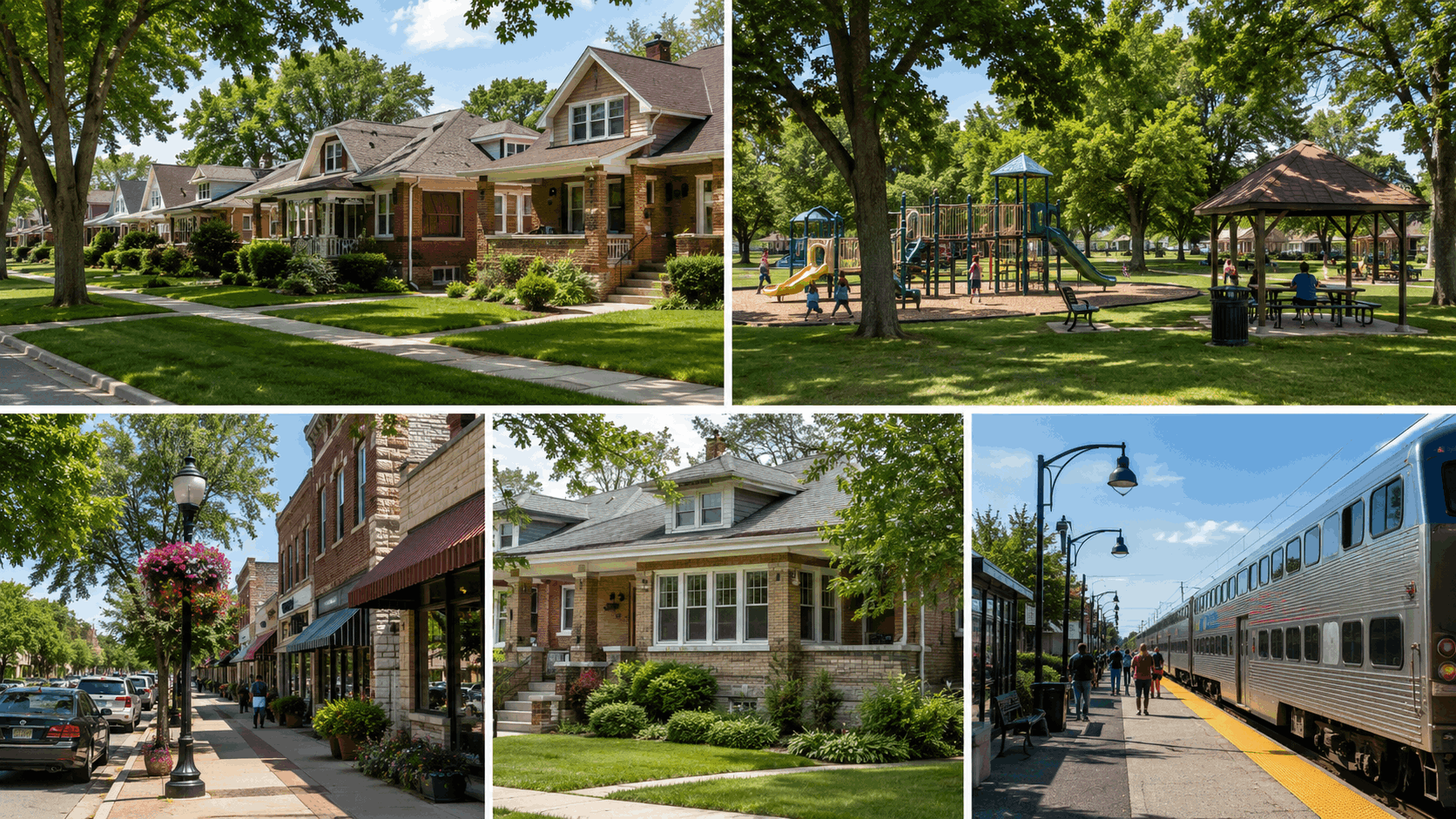
Choosing where to buy should be based on facts, numbers, and personal priorities, not pressure or assumptions.
For first-time buyers, the location conversation usually starts with practical questions:
What monthly payment feels comfortable?
How do property taxes affect the budget?
What type of home fits the buyer’s needs?
How does the commute work?
Are there municipal requirements to consider?
What does available inventory look like in that price range?
How does the loan program affect the search?
Two homes with the same purchase price can have very different monthly payments once taxes, insurance, association fees, and loan terms are factored in.
That is why local strategy matters.
The goal is not to tell buyers where they “should” live. The goal is to help them compare options clearly so they can make an informed decision based on their budget, financing, lifestyle needs, and long-term plans.
Common Mistakes Buyers Make Before Applying
Waiting Until They Find a House
Buyers should understand financing and assistance options before falling in love with a property.
Because nothing creates stress faster than finding the perfect house… and realizing the financing conversation should have happened three weeks earlier.
Ignoring Credit Cleanup
Even small credit improvements can impact:
-
loan approval,
-
interest rates,
-
monthly payments,
-
and assistance eligibility.
Using Every Dollar for the Down Payment
Homeownership comes with ongoing costs:
-
maintenance,
-
repairs,
-
moving expenses,
-
utilities,
-
and at least one completely unexpected trip to Home Depot that somehow costs $417.
Keeping financial reserves matters.
A lot.
What Documents Are Needed for Chicago-Area Down Payment Assistance?
Most programs require:
-
recent pay stubs,
-
W-2s or tax returns,
-
bank statements,
-
identification,
-
employment verification,
-
and debt information.
Preparing documents early helps buyers avoid unnecessary delays during underwriting and approval.
And smoother processes are always better than last-minute financial scavenger hunts.
What Credit Score Is Needed for Chicago-Area Down Payment Assistance?
Most Chicago-area programs prefer:
-
credit scores between 620–640 minimum,
though some FHA-related programs may allow lower scores depending on the buyer’s full financial profile.
Buyers do not need “perfect credit” to explore homeownership options.
They just need accurate information and realistic guidance.
How Much Assistance Can Buyers Receive?
Assistance amounts vary depending on:
-
program type,
-
household income,
-
purchase location,
-
and funding availability.
Some buyers may qualify for several thousand dollars toward:
-
down payment costs,
-
closing costs,
-
or financing assistance.
Programs can change frequently, which is why buyers should always verify current availability with approved lenders and official housing agencies.

Wondering What You May Actually Qualify For?
A lot of buyers assume they either:
-
make too much money for assistance,
-
or don’t make enough to buy at all.
Neither assumption helps.
The smarter move is understanding your options early so you can make decisions with clarity instead of stress.
👉 https://chicagohomesandliving.com/downpaymentquiz
It only takes a few minutes and can help buyers better understand:
-
possible assistance programs,
-
financing options,
-
grant eligibility,
-
and realistic next steps.
Because informed decisions always beat financial guesswork.
*Important note: Down payment assistance programs, income limits, credit requirements, funding availability, repayment terms, and eligible locations can change. This article is for general educational purposes and should not be treated as loan, legal, tax, or financial advice. Buyers should confirm current options with an approved lender, official housing agency, attorney, or tax professional when appropriate.
Frequently Asked Questions
Do I need 20% down to buy a house in Chicago?
No. Some buyers may be able to purchase with a lower down payment depending on the loan program, lender approval, assistance options, and eligibility guidelines. Some conventional loan options may allow down payments as low as 3%, while FHA loans may allow down payments as low as 3.5%.
Can down payment assistance be used in Chicago suburbs?
Yes. Many programs apply throughout Chicagoland suburbs and surrounding counties.
Are these programs only for low-income buyers?
No. Many middle-income households qualify depending on local income limits and household size.
Will taking the quiz affect my credit score?
Most preliminary assistance quizzes do not impact your credit score.
How long does the approval process take?
Approval timelines vary depending on the lender, loan type, and assistance program requirements.
Should buyers get preapproved before house hunting?
Absolutely. Preapproval helps buyers understand their budget, financing options, and potential eligibility before making offers.
Final Thoughts on Chicago-Area Down Payment Assistance
The biggest mistake buyers make is assuming they need to have everything perfectly figured out before exploring their options.
That mindset keeps people stuck longer than necessary.
The reality is that many buyers across Chicago and the suburbs are far closer to homeownership than they think — they just need better information, realistic guidance, and a clear strategy.
Good decisions come from:
-
understanding the numbers,
-
preparing early,
-
asking smart questions,
-
and working with people who know how to guide the process clearly.
Not pressure.
Not hype.
Not panic.
Just smart, informed homeownership decisions built around real life.
And honestly, that’s how it should be.
Equal Housing Opportunity. Program availability, eligibility, funding, income limits, credit requirements, repayment terms, and approved locations may vary and are subject to change. Buyers should verify current options with an approved lender, official housing agency, attorney, or tax professional when appropriate.
Categories
Recent Posts